My cycling route planner, free and without an account.
This case study is still being written: the pictures are here, the story is coming. Meanwhile, C&H Creations and Confort Air Ventilation show how I tell a project from start to finish.

As a cyclist who likes to make her time count, I used to spend long moments looking for hilly routes to ride around my region, to train and progress properly. But the apps that did the same thing asked me to subscribe before I could even tell whether they would meet my need. Stiip was born to answer it. The app is still in beta, open to everyone and free for amateur cyclists. A pro version is planned for 2027, with a small monthly subscription for the keenest riders, the ones who go beyond 100 km.
Using it is simple: you give it a start and a distance, and it builds the hilliest loops around you, ready to send to your GPS.
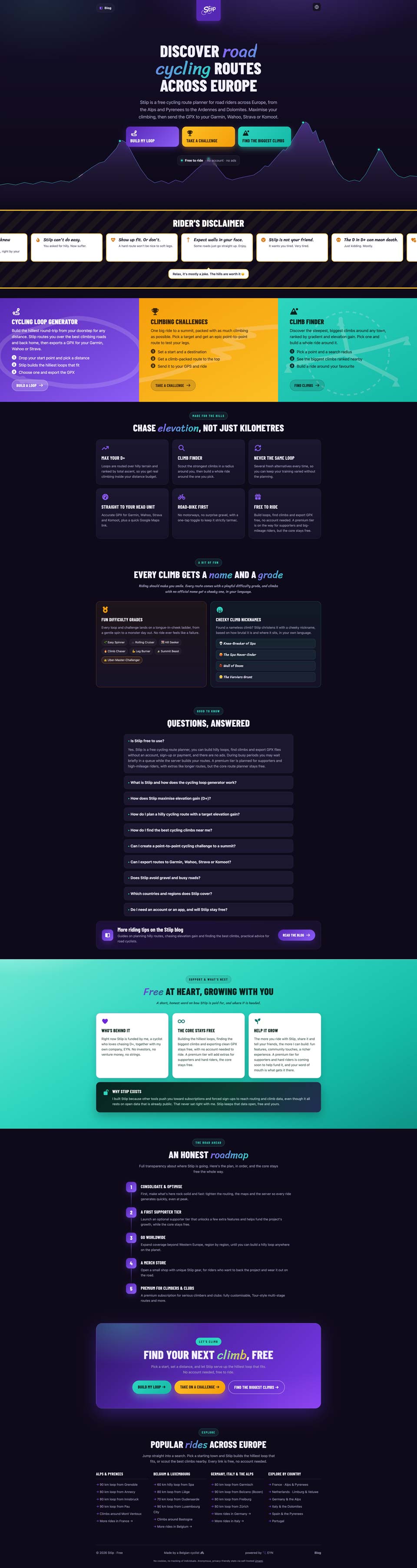
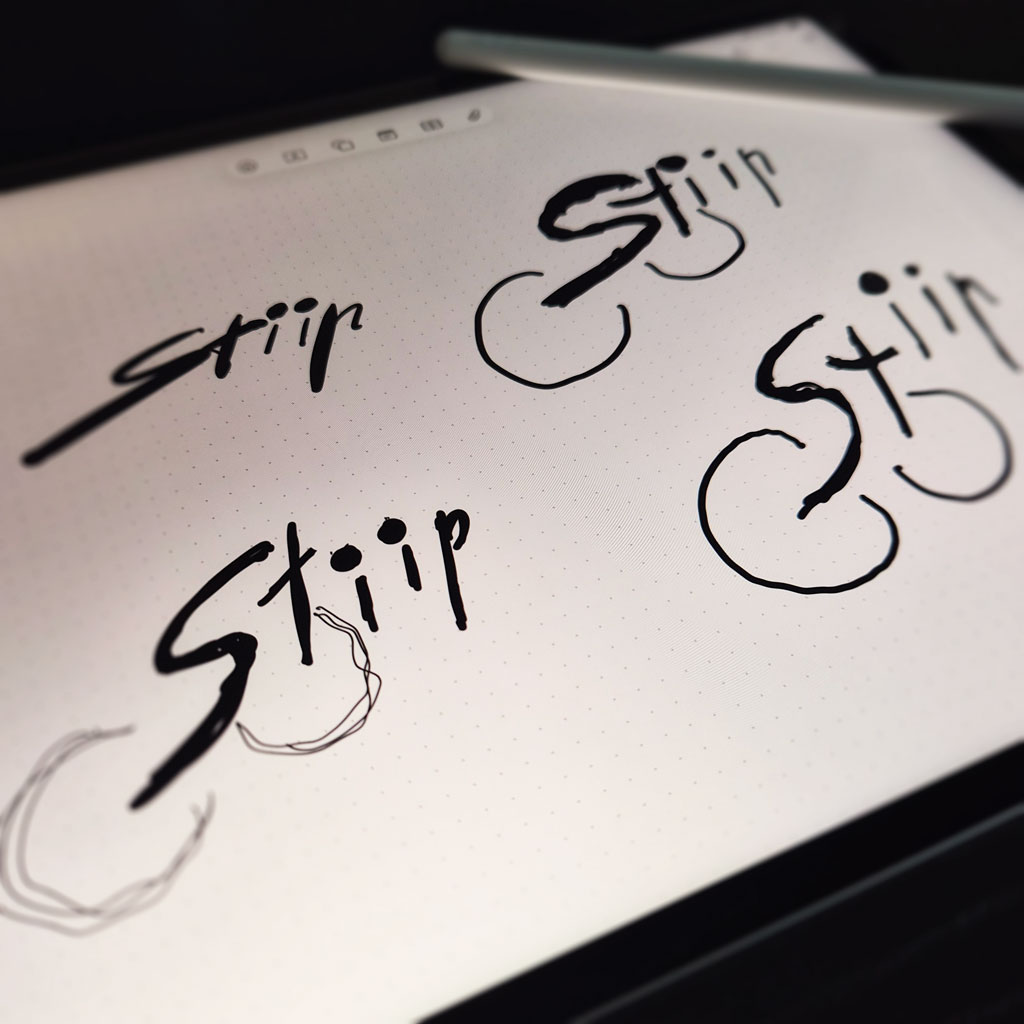
The whole project was designed and built by me, from the logo drawn in a few hours to the engine that generates the routes, all hosted on my own server.
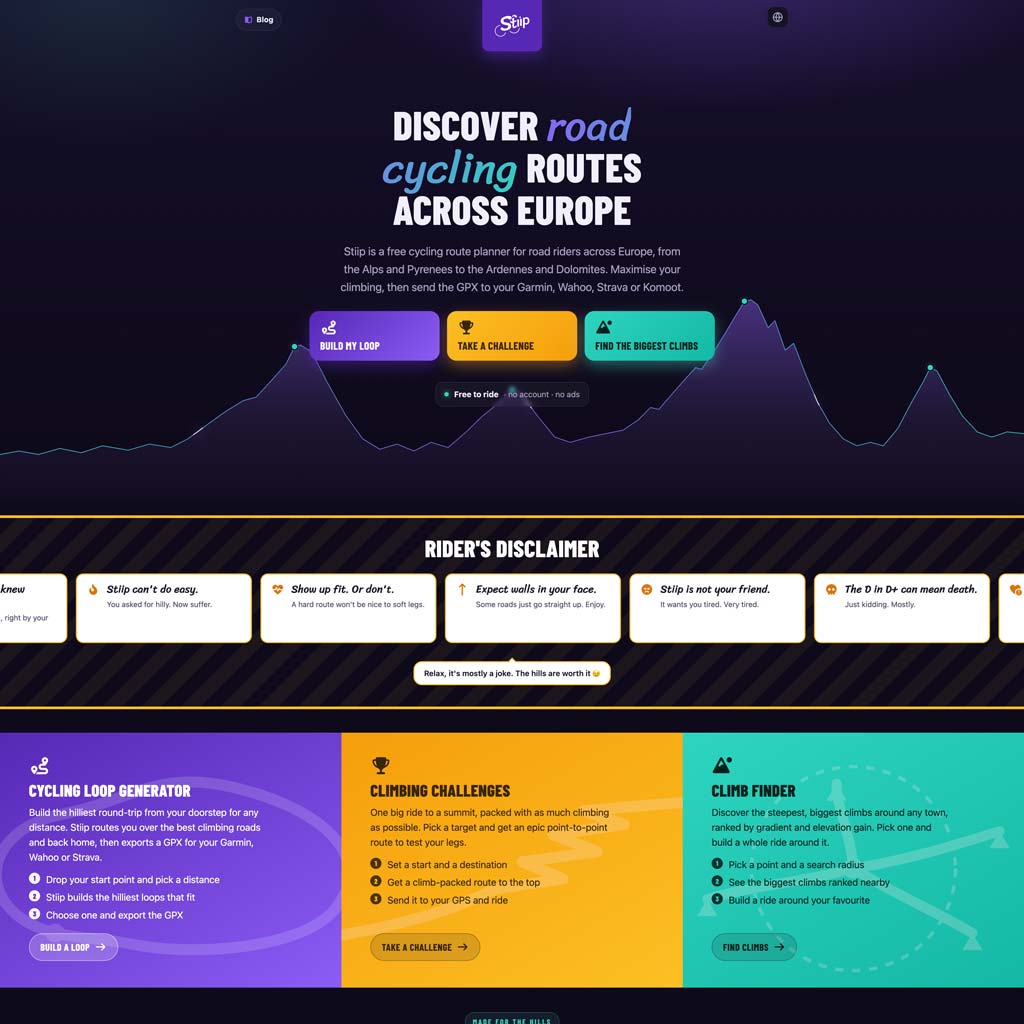
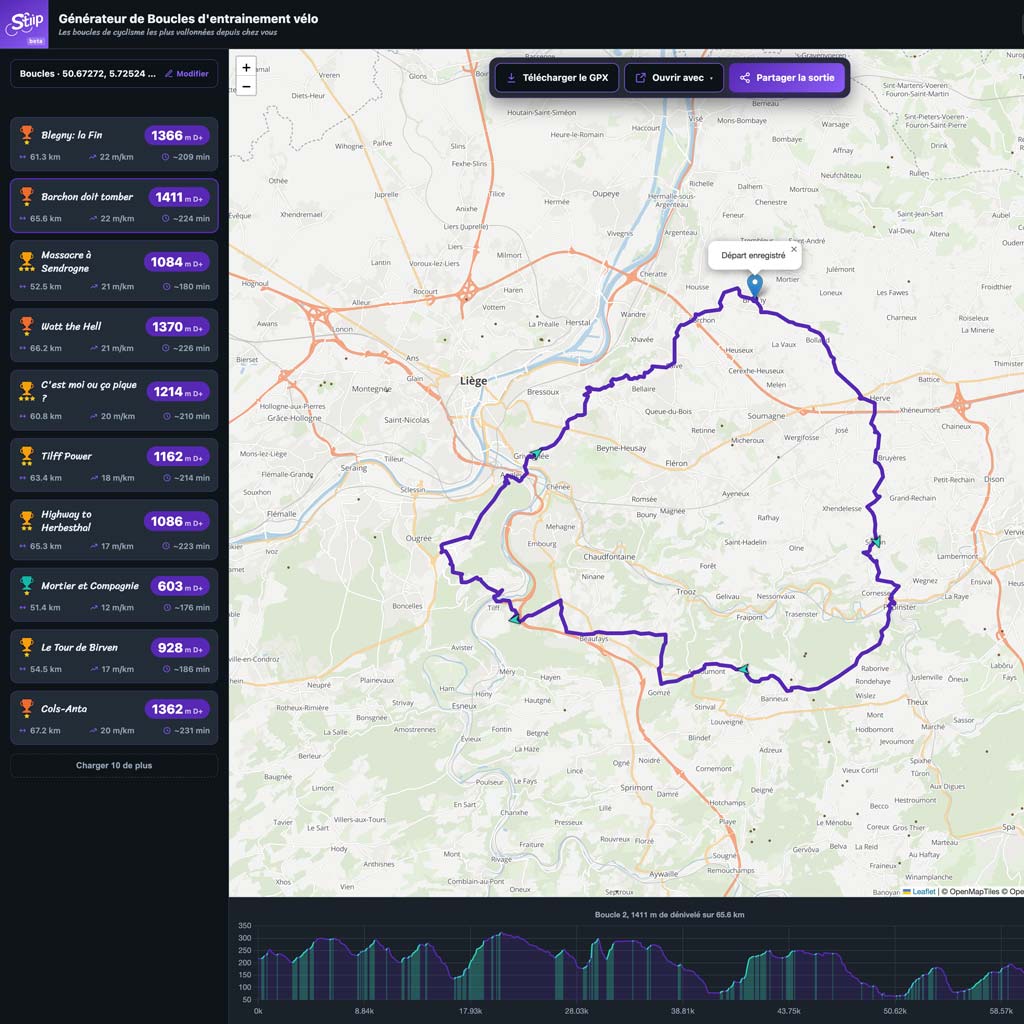
Online since the second quarter of 2026, the app grows little by little, and dozens of cyclists already use it every day.
The first figures
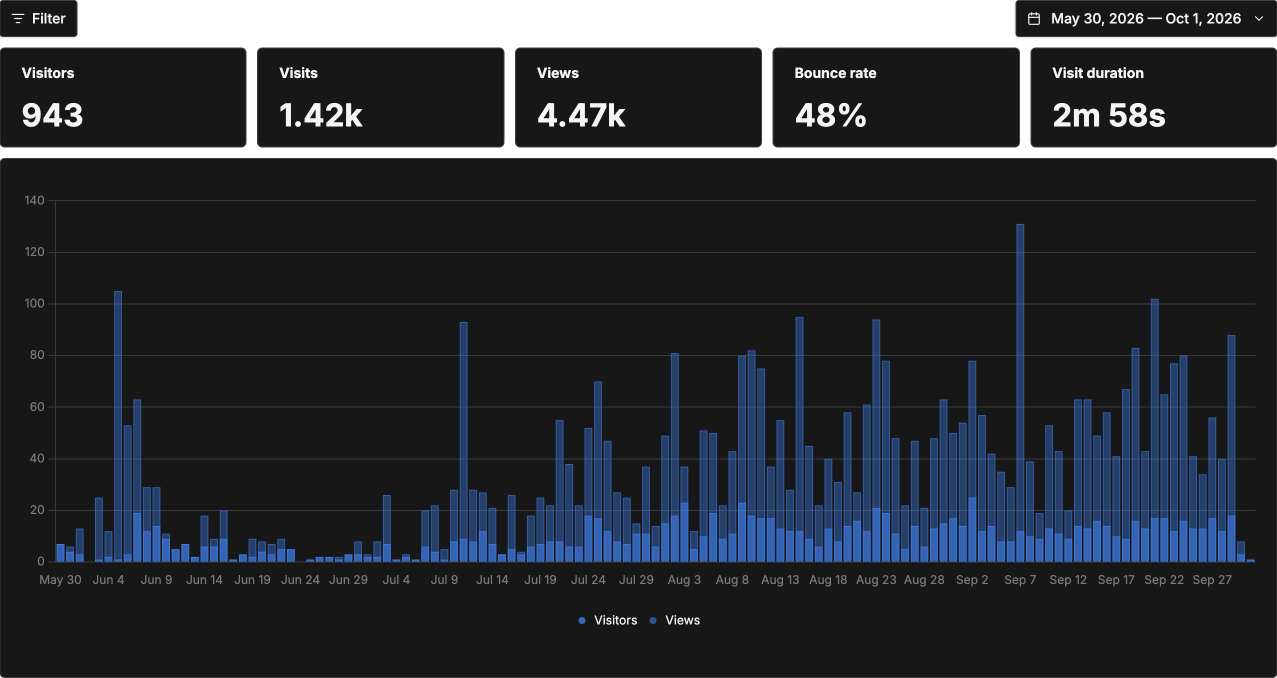
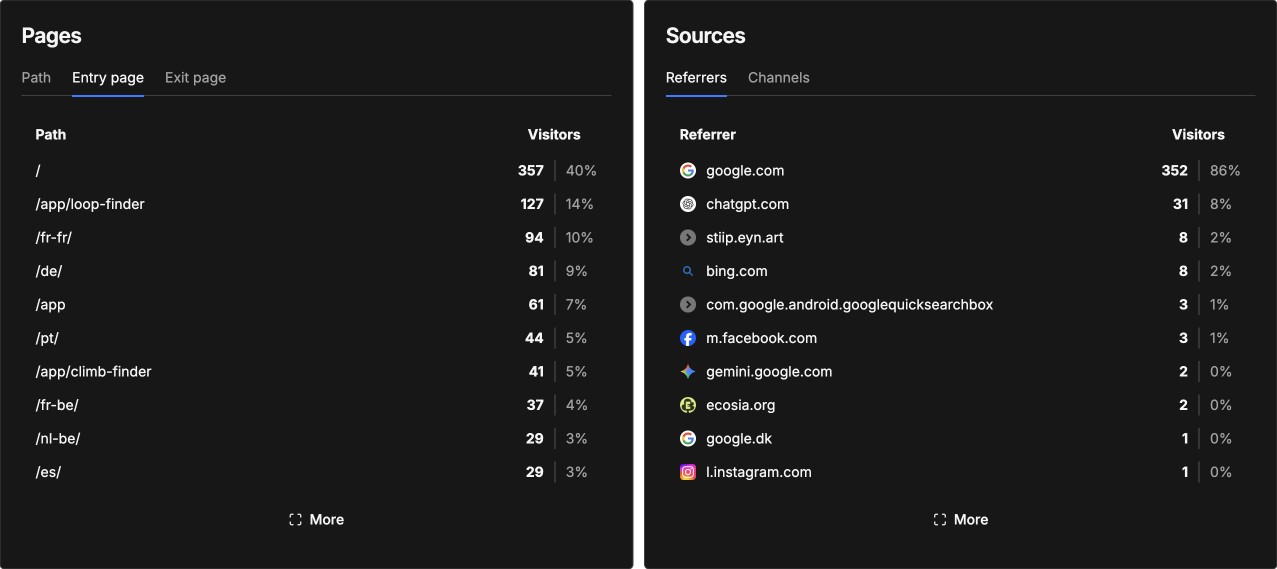
Four months after the launch, the figures say the app is used. From the end of May to the start of October 2026, 943 visitors, 1,420 visits, close to three minutes per visit. Nearly nine visitors in ten arrive from Google, and ChatGPT already sends a few. The entry pages tell the rest, people land in French, German, Portuguese, Dutch and Spanish. At the end of September, Google Search Console marked a first milestone, 150 clicks from search in 28 days.

A passive virality
Stiip's visibility is passive. It comes from Google first, then from sharing, and the app itself is designed to travel, with three levers.
The first is ego. The engine builds the loops with the most elevation gain for your distance, and the hardest one comes first. Hard to resist riding it, and then letting people know.
The second is the challenges, really tough routes, a little like a mountain stage of the Tour de France. A route can be shared as an image, square for a post or upright for a story, with the map, the elevation profile and the stiip.app address in plain sight.
The third is the names. The names of famous places being hard to retrieve, Stiip takes the name of a town the route passes through and turns it into a wink, often a parody of a film, a series or a video game. That gives “Grand Theft Stavelot”, “Pulp Spa” or “Climb Raider”. It is Stiip's signature touch, shown from the home page onwards, along with a playful difficulty grade, from “Easy Spinner” to “Uber-Master-Challenger”.
For now, most of the traffic still comes from Google. Sharing is being fine-tuned, and it will gain strength with version 1.0.
Stiip is still a beta. At the end of the year, and for 2027, it moves to version 1.0, with a brand new look and brand new features. Ride it meanwhile at stiip.app.