The app I had always been looking for to organise my ideas.
The context
I have been starting projects since I was a kid, and the problem never changed. The ideas overflow, and holding them somewhere sane is painful.
I spent years looking for the least bad tool. Eventually I stopped looking and built the one I wanted.
The product
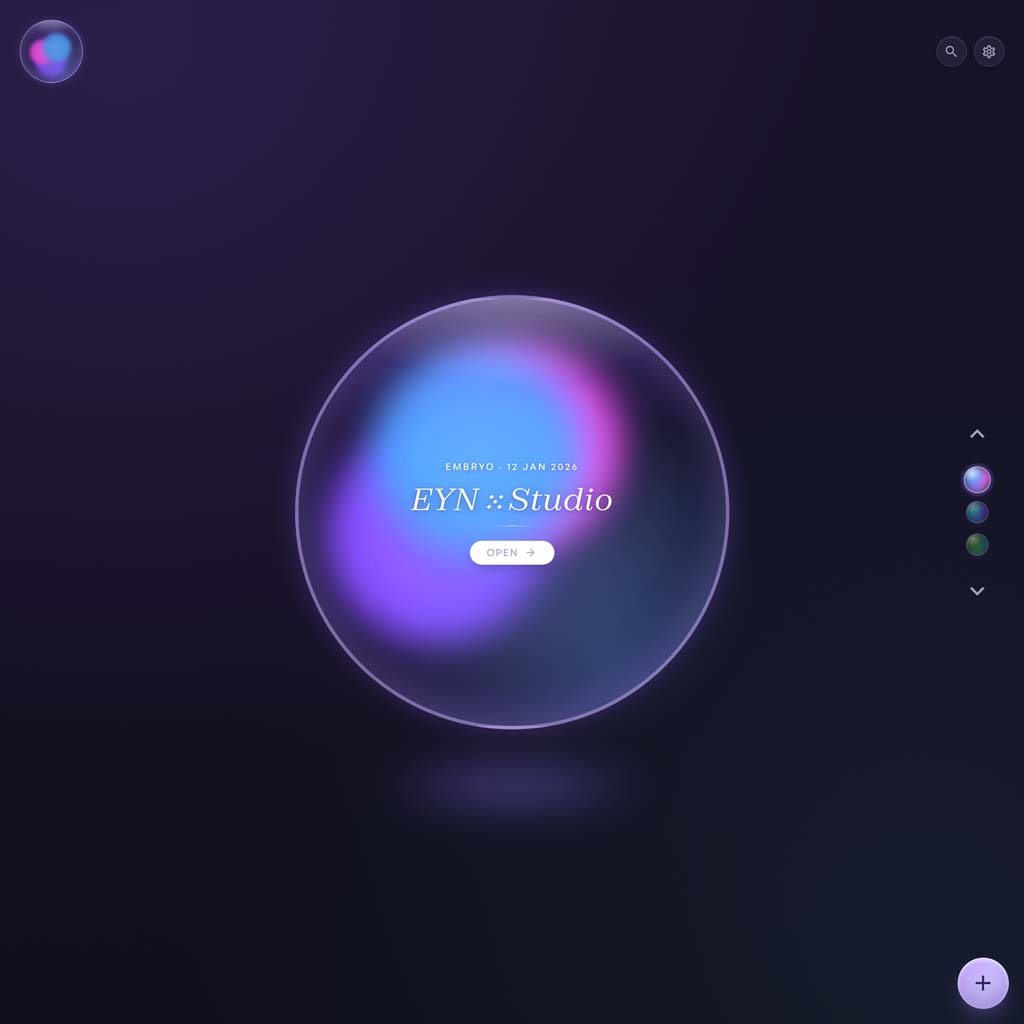
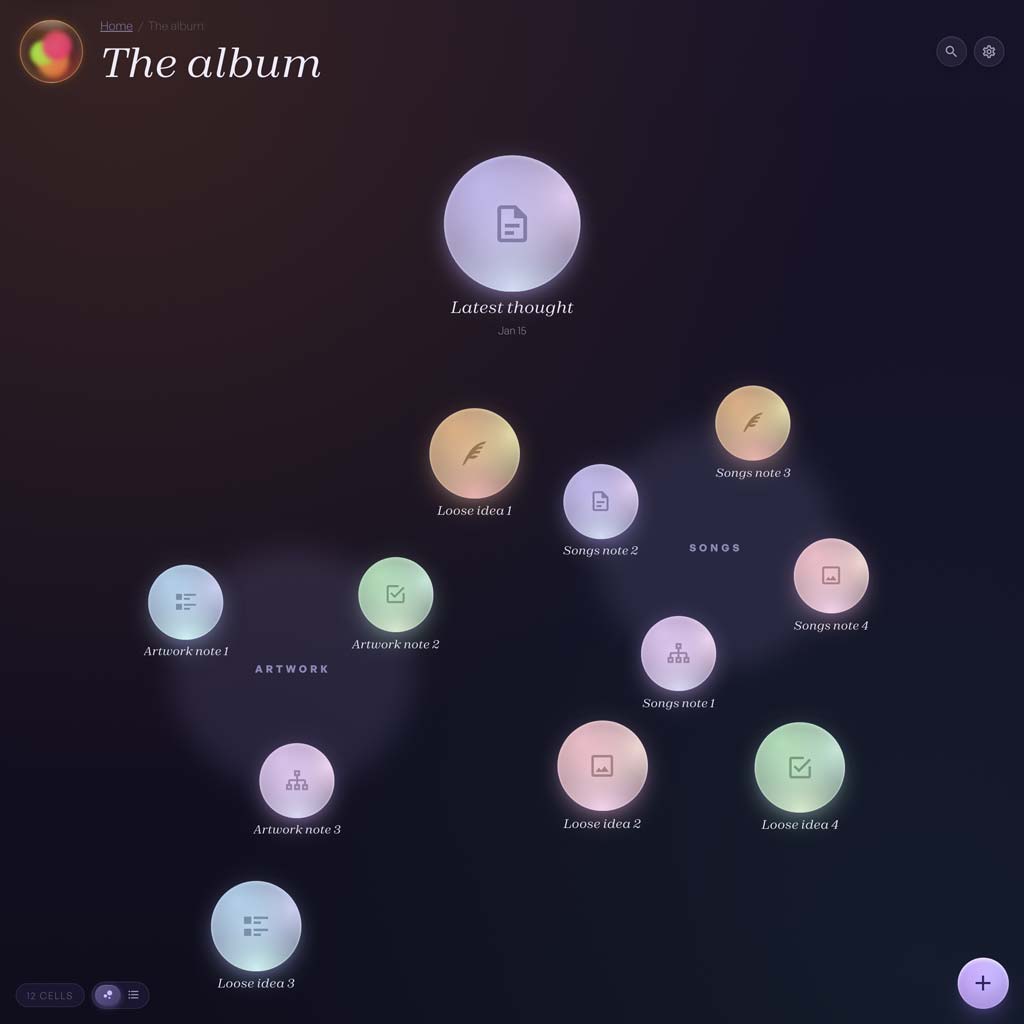
Awendy is a safe, comfy, lively place to think. You open it, pour in every thought around a single goal, and shape them into something you can actually build: a school assignment, a SaaS idea, a song, a book. Each project is an embryo you fill with cells: documents, stories, moodboards, goal maps, spark gardens, atomic notes. Everything is plain Markdown on your own disk. No account, no telemetry, no cloud.
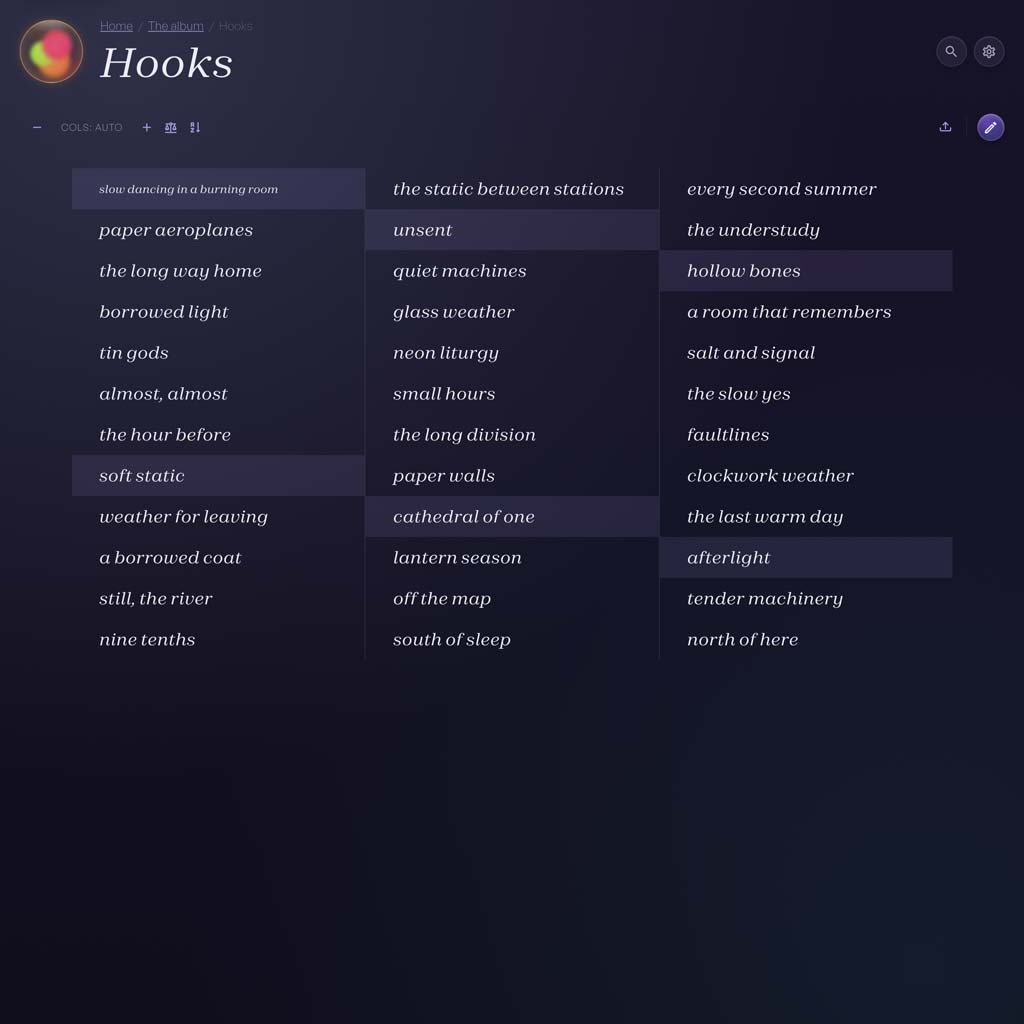
What the interface refuses to do
The interesting part is not the feature list. It is what the interface refuses to do.
It never interrupts. No badges, no unread counts, no toasts stacking in a corner. A small living orb sits at the top of the window and changes how it moves and what colour it turns. Saving, saved, changed on disk, failed. You read it in half a second without leaving what you are doing, and you can ignore it without missing anything.
It never makes you anxious. Your work saves itself into ordinary files you own, so there is no save button to forget and nothing to lose. Nothing flashes and nothing scolds. Half-finished thoughts are the normal state of this app, not an error to clear.
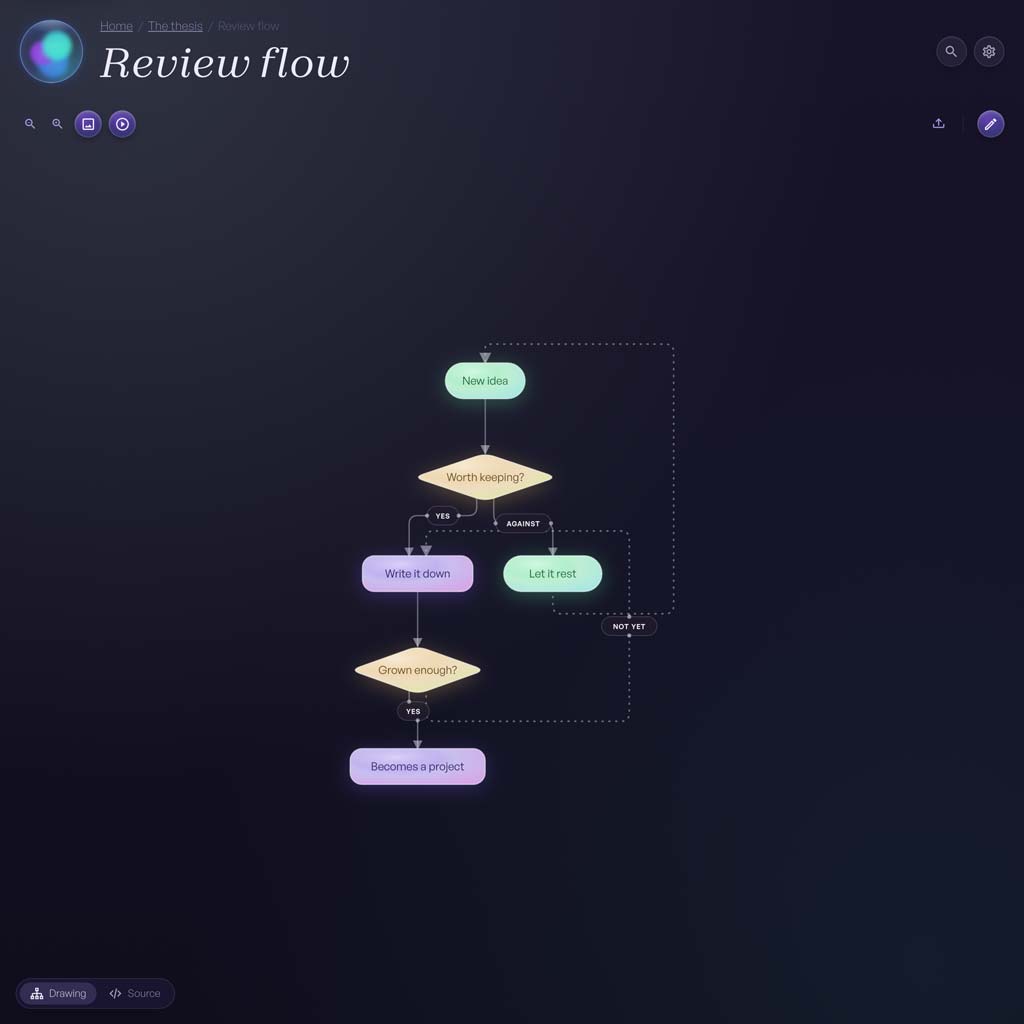
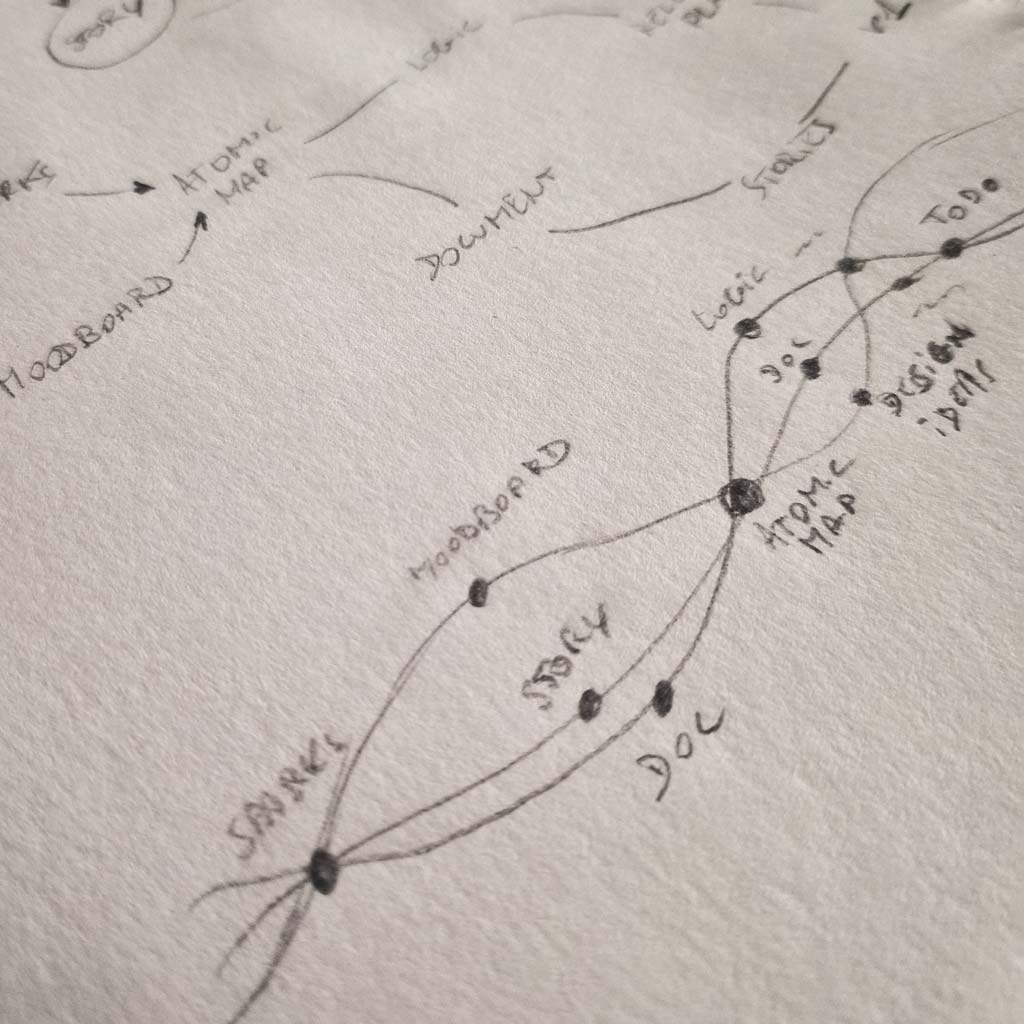
It makes growing visible. Every project is a living orb carrying its own colour through the whole app, so it feels like a place instead of a row in a list. Ideas branch into maps you move inside of, one level at a time, so going deeper feels like travelling rather than clicking. A project you have fed gets denser and more alive.
That is the part of the work I care about. Deciding what a product should not do, then making everything that remains feel worth opening.
From the product to the code
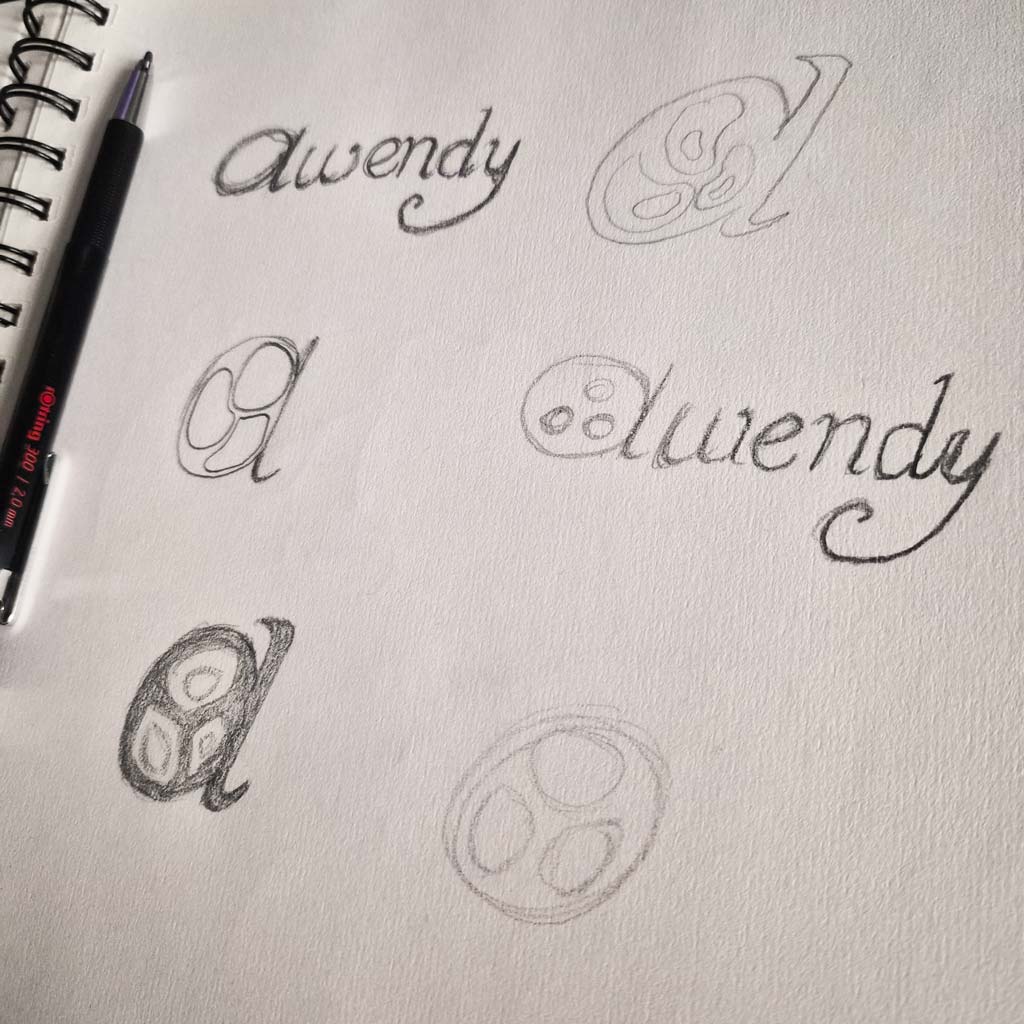
I built Awendy end to end. Product and UX, the visual identity, the interface, the engine underneath, an offline voice assistant that never sends your audio anywhere, and a bridge that lets AI agents read and edit the same files.
Some sketches:
Technology choices
- Tauri 2
- Rust
- Angular 21
- TypeScript
- whisper.cpp
- MCP
- Playwright


Your files, on your disk. Every project is plain Markdown in a folder you own. No account, no cloud, it works offline and syncs through whatever you already use.
One app, four platforms. A single codebase for macOS, Windows, Linux and iPad, about 20 MB thanks to Tauri and Rust.
Dictation that stays home. Speech to text runs on your machine; nothing you say leaves it.
Ready for your AI assistant. An MCP server lets Claude and others read the same projects, installed in one click.
Awendy will be released in early 2027. Follow its progress at awendy.com.
If you are building something and you want it to feel like this, get in touch.