How a multilingual website helps your local SEO
In Belgium, your clients search in French, Dutch, German or English, and very often with the name of their town. A website that speaks to them in their language, and that names the places where you work, has a far better chance of appearing in their searches. Here is why, and how to build it well.
In short
- Each language opens up new searches, with their own words.
- A translation written for each audience, with its words and its places.
- A little more work, for every text and every update.
- Project pages with the name of the town in the title.
- A complete Google Business Profile and the same contact details everywhere.
- Following each language separately, to adjust.
Each language opens up new searches
Google first shows pages written in the language of the person searching. A client in Leuven who types "dakwerken Leuven" will see websites in Dutch, and it is a Dutch version of your website that will let them find you. Each language you add is a new set of searches your website can answer.
In Belgium, this is even more true. The country has three official languages, Brussels lives in French, Dutch and English, and many companies work on both sides of the language border. A Dutch or German version sometimes opens up searches that are far less competitive than their French equivalent.
That is what I did for Stiip, my cycling app, with 13 versions for 8 countries and 7 languages. Visitors now arrive in French, German, Portuguese, Dutch and Spanish.
Translating with each audience's words
A good translation uses the words people actually type, and these words change from one language to another, sometimes even from one country to another within the same language. A Londoner looks for a flat, a New Yorker for an apartment. In Belgium, French speakers replace their "châssis", in France their "fenêtres". On Stiip, French cyclists search for "cols", Belgian cyclists for "côtes".
Machine translation makes a good first draft. It then benefits from a review by someone who speaks the language every day and knows your trade, to find your clients' terms. Three sources are often enough to find them, Google's suggestions as you start typing, the website's statistics once it is online, and quite simply your clients, by asking them how they would have looked for you.
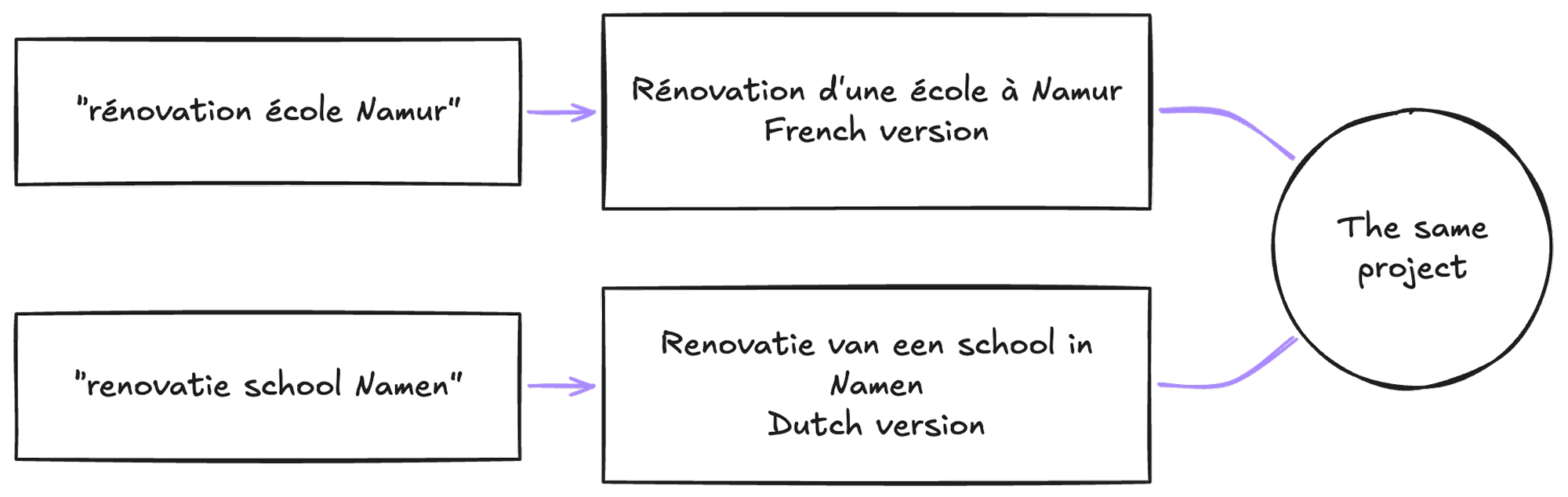
Place names change too. Liège becomes Luik, Namur Namen, Mons Bergen and Louvain Leuven. A Dutch-speaking client searches for "Namen", and that is the name the page should use.
What you gain, and what it takes
A website in several languages brings many advantages, and it also takes a little more work, at launch as well as day to day.
| What you gain | What it takes | |
|---|---|---|
| Searches | New searches in each language, sometimes far less competitive. | Finding the words your clients use in each language. |
| Clients | Clients who read you in their own language, and trust you sooner. | Being able to reply in that language, on the phone as well as by email. |
| Content | A complete website for each of your audiences. | Every text to translate, then to proofread. |
| Publishing | Every project or piece of news reaches all your audiences. | Translating them before publishing, or publishing in one language first, then in the other. |
| Budget | A single website for all your languages. | Translation adds to the website's budget, at launch and then each time you publish. |
Publishing one language a little after the other is entirely possible. A piece of news can appear in French, then in Dutch a few days later, as long as each version stays polished and up to date.
On the technical side, I take care of everything that lets Google show the right language to the right person.
The name of the town in the titles
A large share of local searches combine a trade and a place, "roof renovation Spa", "architect Liège", "gardener Namur". To answer them, the page should name that place, and the spot that matters most is its title.
The most natural way is one page per project. Each job has its own page, with a title that combines the work and the town, such as "Renovation of a school in Namur" or "Building a house in Spa". Project after project, the website draws the map of the places where you work, and each page can answer a local search.
What makes these pages effective is that they tell a real project, with its photos, its constraints and its result. Google calls pages copied word for word, where only the name of the town changes, "doorway pages", and it keeps them out of its results. A real project is useful to your visitors, and that is exactly what Google wants to show.
On a multilingual website, each project is translated with the name of the town in the reader's language, "Renovatie van een school in Namen". On Stiip, this is the role of the popular rides, a list of loops starting from Spa, Malmedy or Stavelot, which anchors each version in its country.
A page presenting the area you cover, with the towns you travel to, completes the picture, as long as it stays written for your clients.
Your Google Business Profile
Your Google Business Profile, the one that appears on Maps and next to the results, counts for a lot in local search. A complete profile, with your opening hours, your photos and your clients' reviews, and the same name, address and phone number as on your website, helps Google connect the two.
Measuring language by language
Once the website is online, the statistics show which language your visitors arrive in, and through which searches. You quickly see which version finds its audience, and which words to add or refine. For Stiip, this is how I saw visitors arriving in five languages.
Your questions
Is a multilingual website good for SEO?
Yes, each language opens up new searches, as long as each version is translated with care, using your clients' words.
Do you need to translate the whole website?
Not necessarily. You can start with the pages that matter most, the home page, the services, the projects and the contact page, then add the rest over time.
Can you use machine translation?
As a first draft, yes. A review by someone who speaks the language every day then brings back the words your clients actually type.
Can you add a language later?
Yes, a website can start in one language and welcome another one later, beginning with the pages that matter most.
How do you appear in searches for a town?
By naming that town where it makes sense, in the title of a project, on the page about the area you cover and in your Google Business Profile, with the same address and phone number everywhere.
Would you like your website to speak your clients' language too? Everything is explained on the web design page.
Thanks for reading


Written by
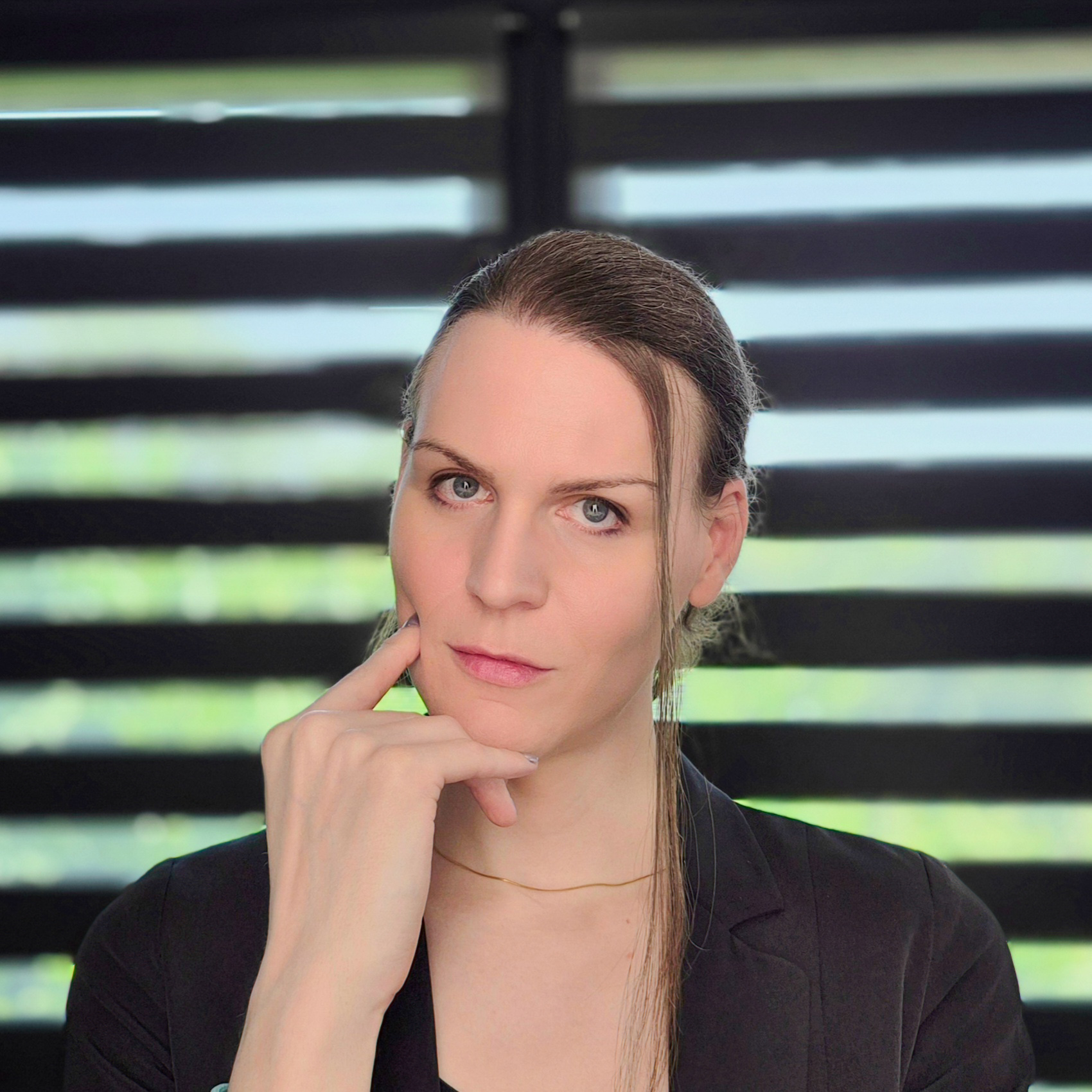
Lexy Callemeyn
Graphic designer & web developer
Hello! I'm Lexy, a graphic designer and a developer of websites and apps for 12 years. Every project is unique to me: I draw logos and I build custom websites for freelancers and companies, from the first sketch to going live, to help them reach their goals with a strong identity online.
A question, a project in mind? Write to me, or discover my work through the links below.
And now?
Want to go further?
Let's talk about your website
Read next